It’s Maple Season!
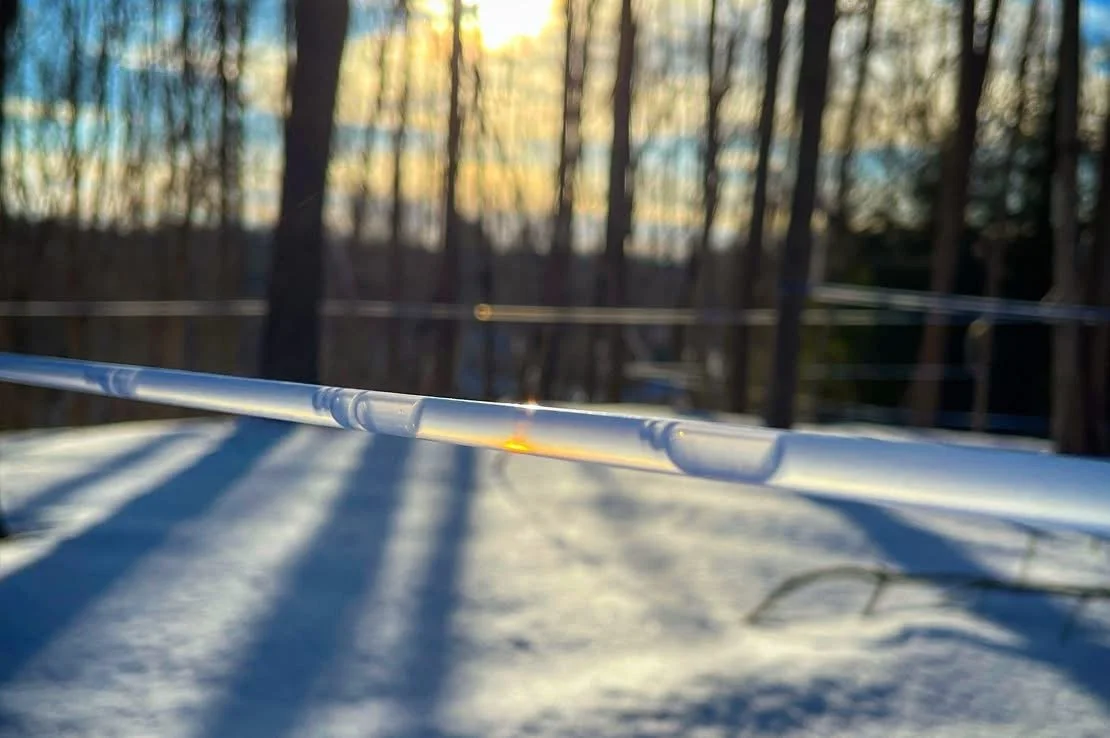
New Hampshire’s iconic maple syrup a treasured item in the region
by Katlyn Proctor
There’s no better known iconic breakfast duo than pancakes topped with a generous pour of maple syrup. It’s even better when that maple syrup is produced in the Northeast, where maple production exceeds that of the rest of the nation. From tapping trees to gathering sap in traditional metal buckets to boiling it down in quaint, rustic sugarhouses, maple syrup producers in the region have the science down to a T. For those looking for some of the good stuff, they don’t have to look far in Southwestern New Hampshire to find it.
Harding Hill Farm
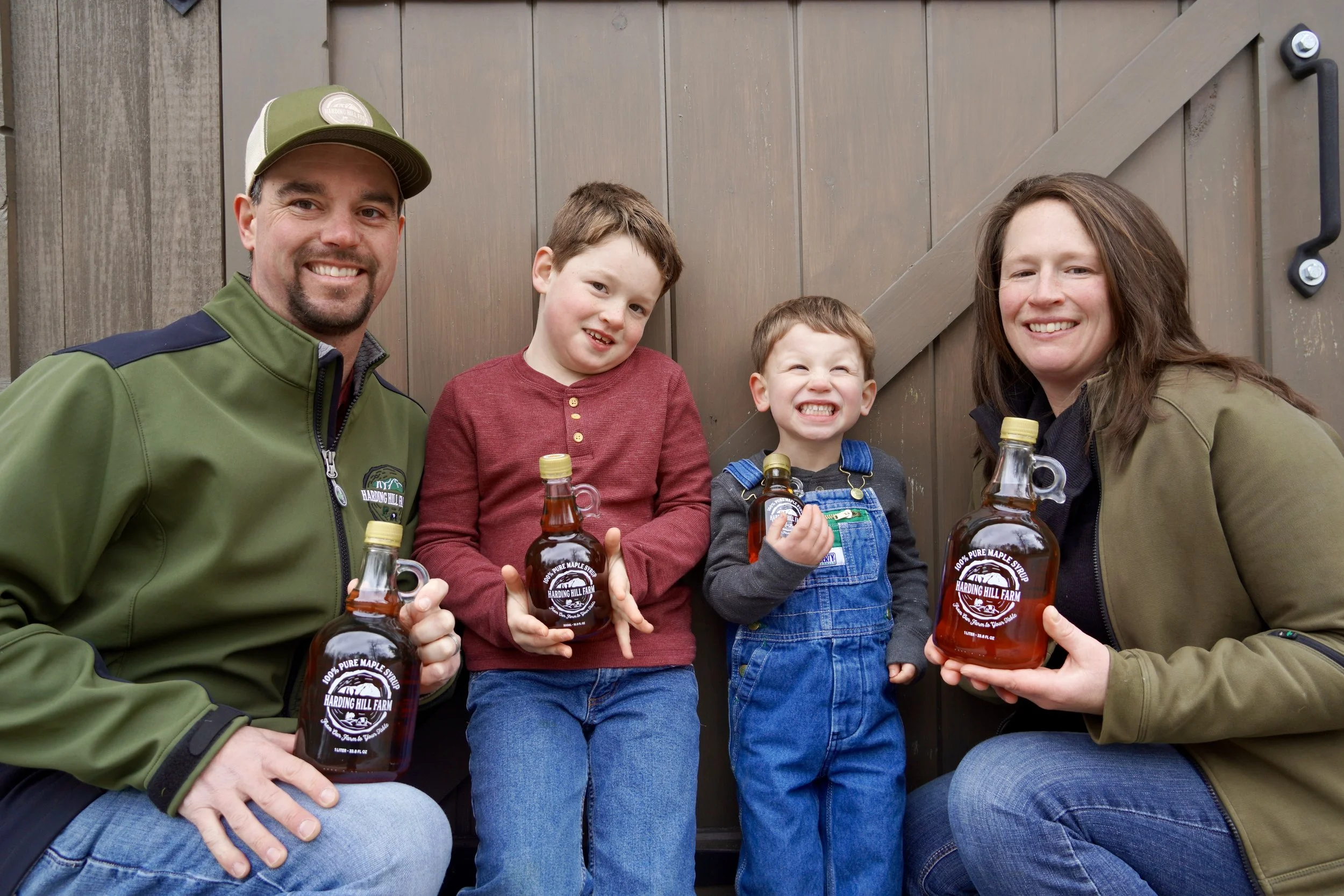
Harding Hill Farm Family, photo credit: Leigh Root Photography
Some might say that Tyler Webb of Harding Hill Farm has some weird hobbies. “My favorite season is maple season. If I could do maple full-time I would, but I can’t, so I do tree work and have a hobby of cows. Maple is my favorite time of year. It’s my favorite thing to do,” said Webb, who also runs a successful arborist company in Sunapee as part of Harding Hill Farm.
The farm offers the quintessential New England sugarhouse experience. Billowing light gray steam exits the sugarhouse, a welcome sign for those surviving the last cold dregs of winter. Inside the building, warmth envelopes visitors in a hug while the specific scent of boiling maple sap hangs heavy in the air. Folks visit Harding Hill Farm to restock the pantry or to participate in New Hampshire’s Maple Weekend, the one time of year it’s allowed to eat sugar in all forms for breakfast. Others visit to see first hand how maple syrup is made.
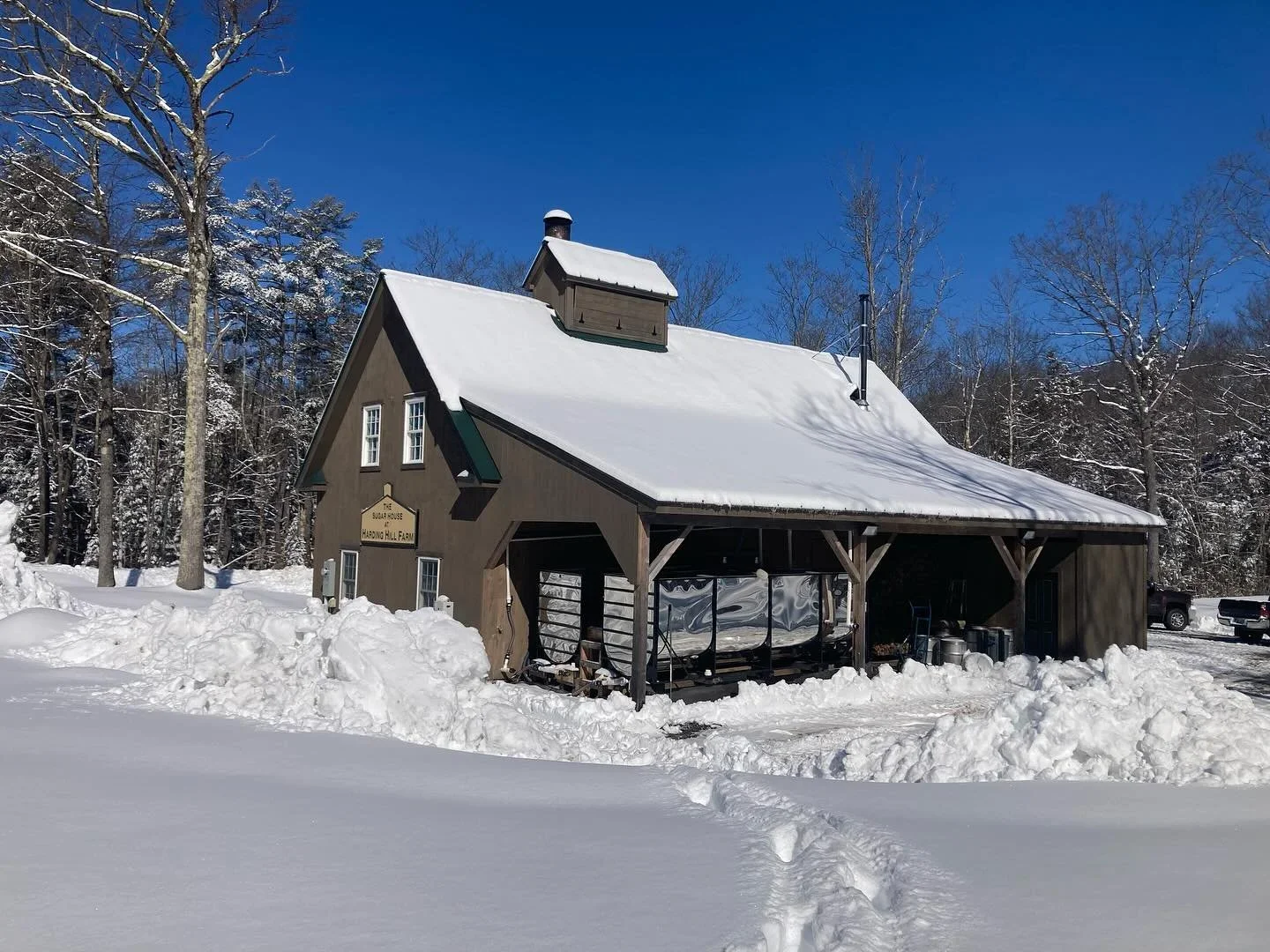
Harding Hill Farm sugarhouse
“The biggest part is educating people. We didn’t build a sugarhouse that was a commercial base. It was a sugarhouse where you can tell the story of maple. We love showing people what we do. We love letting people experience that. Letting kids try syrup right off the evaporator and seeing the sparkle,” Webb explained. With magic like that, it’s no wonder that maple season is Webb’s favorite time of year.
Tamarack Farm
For those New Hampshire residents who live closer to Cheshire County, Tamarack Farm in Acworth is lovingly referred to by owner Kristen Gowen as a “little slice of heaven”.
According to their website, “Blake Gowen is the seventh generation to farm on this land and we work together to produce maple products in the spring, hay during the summer and beef cattle throughout the year. Our love and passion for what we do radiates into every aspect of our lives.”
Their quality maple syrup is available year-round in the store, as well as maple cream, candies and their newest addition — candied nuts. For those not in this neck of the woods, Tamarack Farm offers shipping for folks all over the country.
Beaver Pond Farm
When Becky and Bennie Nelson returned to Newport after leaving their corporate gigs on the Seacoast, they knew they wanted to add maple production to their repertoire at Beaver Pond Farm.
“We’ve never been afraid to try new things and learn as much as we can along the way,” said Becky, “We’ve made some mistakes, tried some products that never gained wings, but never stopped learning and growing. Ben and I have continued growth on the farm by expanding our crop plantings, adding blueberries, grass-fed beef, an apple orchard, apple cider, and maybe most importantly, by adding and growing the maple operation.”.
“We planned from the start on establishing a diversified operation with something for every season, and maple was always on the agenda along with the fruits, berries, and veggies,” explained Becky, “We started off our very first year in maple by building our sugarhouse and tapping about 200 taps. My Dad had never used tubing, only buckets, so the transition was all new. We built our own arch with used parts and pieces and a new set of pans, cut enough wood to get us through the season and learned as we grew. We now tap just over 4,000 taps, have added a vacuum system and reverse osmosis and hope to add more taps in the future. We are still growing and learning every day, some forty years later. It’s been a busy, demanding, but awesome adventure.”.
The sugarhouse, built in 1985, recently received an upgrade with state-of-the-art equipment, replacing their old arch and pans with a much more efficient wood-fired system that reduces fuel consumption and emissions while preserving the tradition of wood-fired syrup making.
Today, passersby can visit the Beaver Pond Farm farm store on John Stark Highway just on the Claremont line to restock their annual supply of liquid gold.
Daisy Hill Farm
Daisy Hill Farm in Grantham is also a family run operation with its prime focus on making maple syrup and maple confections, perfect for folks equipped with a sweet tooth.
The farm’s online reviews speak for themselves. “I LOVE visiting Daisy Hill Farm. They are wonderful at anytime of the year, but sugaring season is the best! Greg, Donna, and Nate treat you like family. Greg will tell you all about sugaring, and his enthusiasm is contagious! He is a true renaissance man. This is the best of N.H. and why I love living here,” wrote Mary Jo MacGillivray Weber, who visited for the 2020 maple syrup season.
“Fantastic family, wonderful syrup in the spring, vegetables in the summer and AWESOME pumpkins,” wrote Jamielynn Newman Garland. In addition to maple syrup, Daisy Hill Farm is also known for their pumpkin patch.
Valley View Maple Farm
Since 1937, Valley View Maple Farm has boiled and sold maple syrup products year-round, specializing in all things maple. The syrup is still boiled with wood in a modern state-of-the-art evaporator.
In addition to maple syrup, the farm provides maple sugar, maple cream, maple candy, maple jelly and an assortment of flavored maple condiments.
As a special touch, Ben Kezar crafts handmade wooden gift boxes from lumber harvested and sawn on the sawmill at Valley View Maple Farm.
Other CGC members producing maple syrup and products:
Long View Farm
338 Borough Rd. Charlestown, NH 03603
Taylor Brothers Sugarhouse and Creamery
166 Main St., Plainfield, NH 03781: Taylor Brothers Sugarhouse and Creamery is a generational family farm specializing in Maple Syrup and Diary. You can find premium cheeses, syrups and maple confections crafted by Taylor Brothers Sugarhouse and Creamery at stores like Garfield’s Smokehouse.
Macs Maple (Open for Maple Weekend 3/21, 3/22!)
259 River Rd, Plainfield, NH 03781, USA
A Brief History of Maple Syrup
By BOB MARTIN
Annually in March, the abundant maple trees in our region are tapped, with buckets catching sap all across New Hampshire and Vermont. This is the start of the maple sugaring process, which is a staple of the Connecticut River Valley region that has a long history dating well before European settlers arrived.
Native Americans were the first to discover that maple tree sap can be processed to make this tasty treat, according to the UNH Cooperative Extension, which notes that maple sugar was integral to their diet. They would use hot stones placed in hollowed logs and bark containers to produce the syrup, and then make it into block sugar, stirred sugar and wax sugar.
This tradition was adopted by settlers who considered it a “moral alternative” to the slave produced sugar cane. It was popular in the Revolutionary War time and, even when sugar cane became less expensive, it continued to be a big crop for farmers. The process has changed over the years, going from hollowed logs to metal kettles and eventually sugarhouses.
In the summer, maple leaves catch sunlight, helping create sugars used during the growing season and also stored in the winter to help the tree grow in the spring. This stored sugar is what maple producers are tapping into, and it all relies on having cold nights and warm days.
Maple tree sap has an average sugar content of only 2.2%, which means that a lot of water needs to be boiled off to concentrate the sugar and minerals in the sap to syrup, which has a sugar content of about 67%. On average, about 40 gallons of sap is needed to produce a gallon of maple syrup. One taphole into a maple tree can produce 10 gallons of sap, boiling down to about a quart of syrup, according to UNH Cooperative Extension.
Got maple trees on your land? Try tapping one yourself and boiling down the sap for some delicious syrup
Some content has been edited and rewritten by the Board of the Claremont Growers Collective.